The Changing Role of Small-Town Police Officers
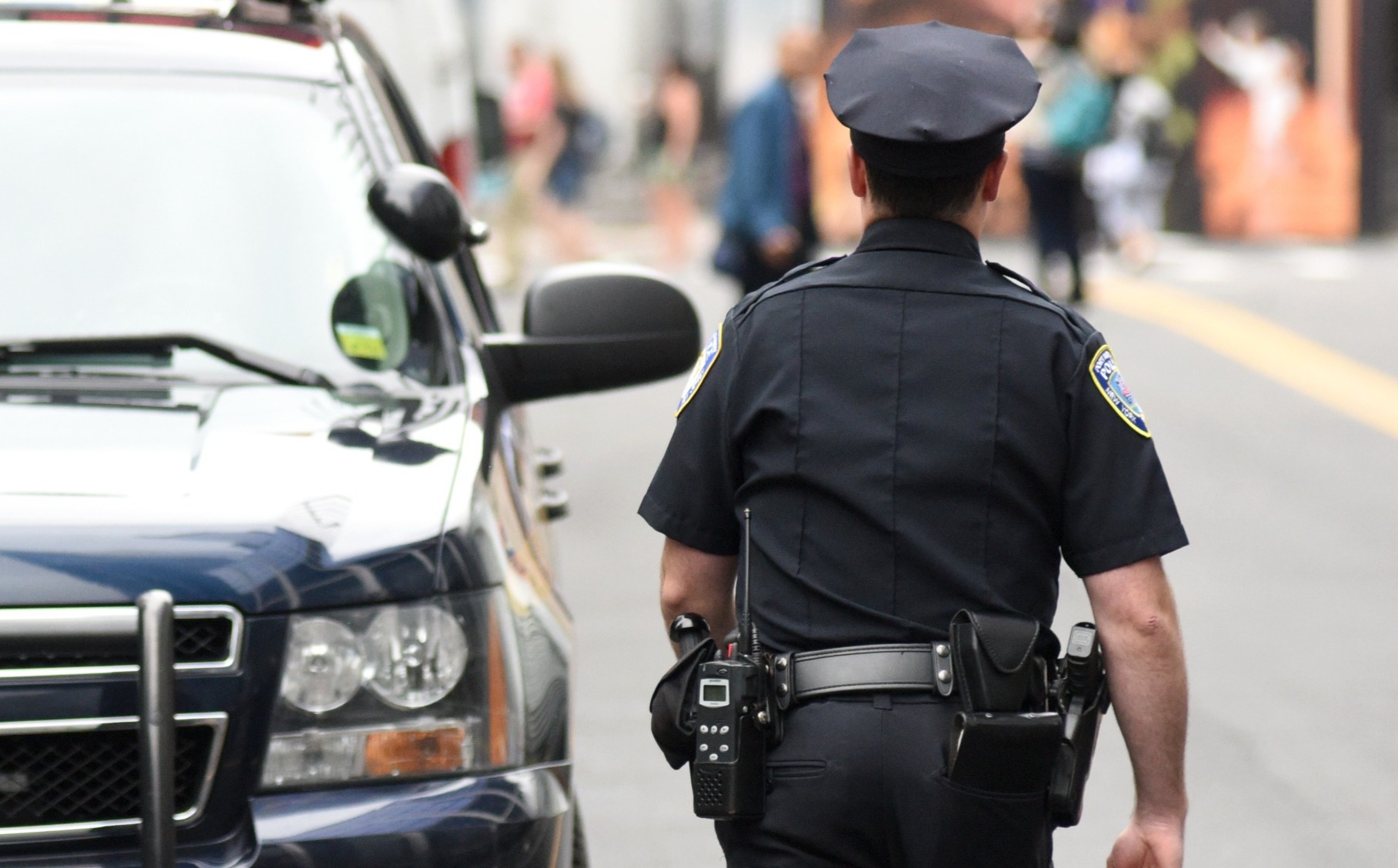
ASHEBORO, N.C.— Ask most people to picture a small-town police officer, and they still see something close to Mayberry: a friendly figure who knows everyone by name, writes the occasional speeding ticket, and settles disputes with a word of advice rather than a citation. That image never fully matched reality, but it matches it less every year. Across the country, officers in towns of a few thousand people are now expected to be patrol cop, mental health first responder, traffic investigator, crime scene technician, school liaison, and — increasingly — the last line of defense against a staffing crisis that has hit small departments even harder than big-city ones.
From generalist by tradition to generalist by necessity
Small-town policing has always required officers to wear more hats than their big-city counterparts. Roughly half of all U.S. police departments serve communities of fewer than 10,000 residents, and about 70% of agencies nationwide operate with 10 or fewer commissioned officers, according to federal statistics cited by American Police Beat magazine. Without the luxury of specialized units, one officer on a small force might handle a traffic crash in the morning, a welfare check at noon, and a burglary investigation by evening. An article in The Plainsman Herald in Springfield, Colorado put it bluntly: while big-city departments divide officers into specialized units for traffic, major crimes, DUIs, and crime scene work, small-town officers are patrol cops, detectives, traffic investigators, crime scene processors, and community liaisons all at once.
That generalist model isn't new—it's arguably what small-town policing has always been. What's changed is the weight added on top of it.
A national staffing crisis that hits rural and small departments hardest
The clearest and most measurable shift in American policing over the past several years is a workforce shortage. A 2024 survey by the International Association of Chiefs of Police, drawing on responses from 1,158 agencies, found that over 70% of agencies reported recruitment had become more difficult than five years earlier, with departments operating at roughly 91% of their authorized staffing levels—a gap of nearly 10%. The same survey found that 65% of agencies had to reduce services or eliminate specialized units due to staffing shortages, up from just 25% in 2019, and noted that shrinking staff has in some places forced cuts to community engagement programs, potentially eroding public trust.
This isn't just an urban problem. Research from the Peace Officers Research Association of California found that staffing shortages are pervasive across both rural and urban departments, and that staffing levels are the strongest predictor of emergency response times. American Police Beat magazine has identified rural counties as facing the greatest recruiting challenges of all, with some departments attributing the shortage to the emotional strain of the job, lengthy hiring timelines, and a decline in public sentiment toward law enforcement.
The reasons behind the exodus are layered. Analysts point to a wave of retirements, a generation of workers less drawn to the demands of shift work and physical risk, and a private sector that increasingly out-competes police pay. A workforce study from the R Street Institute described it starkly: the labor shortage is hollowing out U.S. law enforcement in a way the "defund the police" movement never managed to, driven by shifting demographics, declining institutional trust, and changing attitudes toward work. Some agencies have responded by lowering entry requirements—dropping college-credit mandates or shortening academy training—a trend Stateline reported is now visible at agencies as large as the NYPD, Dallas PD, and even the FBI, though workforce researchers caution that loosening standards is a last resort that can undercut officer maturity and community trust in the long run.
The job has expanded even as the workforce has shrunk
Even where staffing holds steady, the scope of the work has grown. Departments are now routinely first responders to mental health crises, a shift researchers describe as a move away from the traditional "warrior" model focused narrowly on crime control, toward a "guardian" approach rooted in public protection, care, and community wellbeing—a transition driven in part by how often officers now encounter people in mental health crisis, experiencing homelessness, or struggling with substance dependency. Performance Protocol, a workforce consultancy that studies police recruitment, noted in their 2024 study plainly that officers are now expected to handle mental health crises, school security, and proactive community policing on top of traditional enforcement duties—a combination that traditional recruiting and retention strategies were never built for.
Community policing itself, once seen as an urban reform imported to fix big-city departments, turns out to have deep roots in small-town practice. A National Institute of Justice–funded study interviewing dozens of rural sheriffs and small-town police chiefs found that rural officers generally believed their existing practices were already compatible with, or even ahead of, the community-policing ideas being formalized elsewhere, since their effectiveness had long depended on close relationships with the communities they served. In other words: much of what reformers now call "community policing" was simply how small departments already had to operate, out of necessity and proximity.
What this looks like on the ground: Asheboro, North Carolina
Asheboro, a city of roughly 27,000 in the North Carolina Piedmont, offers a useful snapshot of these national trends playing out locally. The Asheboro Police Department operates with 86 sworn officers and 9 civilian employees across administration, field operations, investigations, and support operations. Its Field Operations division includes not just uniformed patrol but a dedicated Community Resource Team, School Resource Officers, and Park Rangers, reflecting how much the modern small-city officer's job extends beyond responding to calls.
The department's Community Resource Team runs community watch programs, daily business checks, safety talks, and youth tours of the department, and partners with nonprofits for community events to build direct partnerships between residents and police. Its uniformed patrol division alone responds to roughly 550 calls for service each week across five patrol zones—downtown, north, south, east, and west—a structure designed to give officers close familiarity with the specific issues in their assigned area and more personal, face-to-face contact with residents. The department’s Vice/Narcotics Unit has also built out specialized functions once reserved for larger metro agencies, including narcotics detectives who partner with federal task forces such as the DEA, ATF and Homeland Security to address drug trafficking and gun violence within the city—a sign that even a mid-sized department now needs some of the specialized capacity once thought of as strictly a big-city necessity.
Recruitment pressures visible nationally show up in Asheboro's own numbers, too: entry-level pay for a police trainee starts at $44,377.92 annually while in basic law enforcement training, rising to $48,619 upon certification—figures that illustrate the kind of compensation small and mid-sized departments are working with as they compete for recruits against private-sector employers and better-funded metro agencies.
A profession redefining itself in real time
Taken together, these threads—a stretched workforce, an expanding job description, and a community-facing mission that small departments arguably pioneered—describe a profession in the middle of redefining itself. The Andy Griffith-era image of small-town policing was never entirely accurate, but the gap between myth and reality has widened.
Today's small-town officer is as likely to be trained in de-escalating a mental health crisis or mentoring a middle schooler as in writing a traffic ticket, and departments from rural counties to cities the size of Asheboro are being asked to do more with less, while public trust and departmental capacity are rebuilt at the same time.
Post a comment